
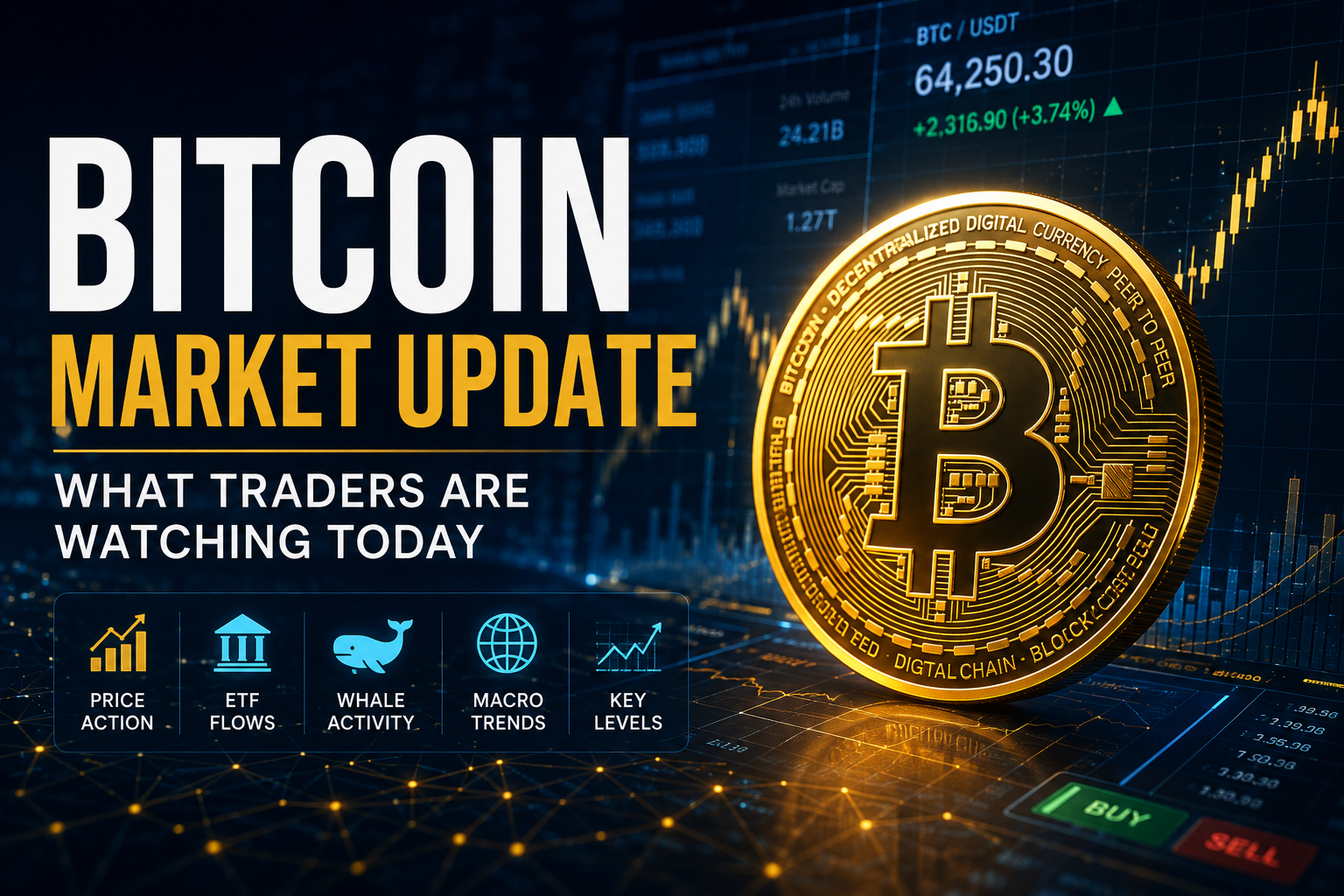
Bitcoin continues to hold the spotlight across global crypto markets as traders and investors closely monitor price action, institutional inflows and macroeconomic developments. Following months of strong momentum and increased market participation, Bitcoin remains one of the most actively discussed assets in both traditional finance and digital asset communities.
As volatility begins returning to the crypto market, traders are carefully watching several key factors that may determine Bitcoin’s next major move. From ETF demand and whale accumulation to Federal Reserve policy and market liquidity, multiple variables are shaping investor sentiment in real time.
While short-term price fluctuations remain uncertain, Bitcoin’s position as the dominant cryptocurrency narrative continues to strengthen.
Bitcoin Remains The Center Of Market Attention
Despite the rapid growth of sectors such as AI coins, meme tokens and decentralized infrastructure projects, Bitcoin still represents the foundation of the broader crypto market. Most altcoin momentum continues to depend heavily on Bitcoin stability and overall market confidence.
When Bitcoin performs strongly, capital often rotates into higher-risk narratives afterward. However, when Bitcoin experiences sharp corrections, market-wide fear usually follows. This relationship keeps Bitcoin at the center of trader focus regardless of broader market trends.
Over recent weeks, Bitcoin has shown resilience despite periods of macroeconomic uncertainty and fluctuating market sentiment. Many analysts believe this resilience reflects increasing institutional participation and long-term investor confidence.
ETF Inflows Continue To Influence Market Sentiment
One of the most important developments shaping Bitcoin’s market structure is continued interest surrounding spot Bitcoin exchange-traded funds (ETFs). Institutional demand through ETF products has become a major source of liquidity and long-term market support.
ETF inflows are now viewed as one of the strongest indicators of institutional sentiment toward Bitcoin. Positive inflow data often boosts market confidence, while weaker inflows may temporarily reduce bullish momentum.
Many traders monitor ETF-related data daily because these investment vehicles allow traditional financial institutions to gain Bitcoin exposure more easily. As institutional adoption expands, Bitcoin increasingly behaves like a macro asset rather than simply a speculative cryptocurrency.
This transition could significantly impact Bitcoin’s long-term market structure and volatility profile.
Traders Are Watching Key Resistance Levels
Technical analysts remain focused on several critical Bitcoin resistance and support zones. Price consolidation near major psychological levels has created growing anticipation regarding the next directional breakout.
Short-term traders are closely monitoring trading volume, liquidity conditions and momentum indicators to determine whether Bitcoin can sustain upward continuation.
At the same time, derivatives markets continue showing elevated open interest, indicating that leverage remains active across both bullish and bearish positions. High leverage environments often increase the probability of sudden volatility spikes and liquidation events.
Many market participants expect increased volatility as Bitcoin approaches key resistance areas, especially if macroeconomic news creates additional uncertainty.
Whale Activity Signals Growing Confidence
On-chain analysts have also identified increased whale accumulation activity across multiple Bitcoin wallets. Large holders continue accumulating Bitcoin during periods of market weakness, suggesting long-term confidence remains strong among experienced participants.
Historically, whale accumulation during consolidation phases has often preceded major upward market movements. While no indicator guarantees future price direction, many traders view on-chain accumulation as an important signal of underlying market strength.
Long-term holders also appear increasingly reluctant to sell significant portions of their Bitcoin positions. Reduced exchange balances and declining liquid supply may contribute to stronger price reactions if buying pressure continues increasing.
This combination of accumulation and tightening supply dynamics continues supporting bullish sentiment across the market.
Macroeconomic Conditions Remain Critical
Although crypto-specific narratives remain important, macroeconomic conditions continue playing a major role in Bitcoin’s price behavior. Interest rate expectations, inflation data and central bank policy decisions remain closely connected to broader risk appetite across financial markets.
Bitcoin’s growing correlation with traditional financial assets means traders now pay closer attention to economic reports and Federal Reserve commentary. Positive macro conditions generally improve liquidity and investor confidence, benefiting both equities and cryptocurrencies.
At the same time, unexpected economic weakness or aggressive monetary tightening could temporarily pressure Bitcoin and broader risk markets.
Because of this relationship, many traders now combine traditional macro analysis with crypto-native indicators when evaluating Bitcoin market conditions.
Retail Participation Is Increasing Again
Retail investor interest in Bitcoin has also started rising again, especially across social media platforms and trading communities. Increased engagement on X, Telegram and YouTube often reflects growing public curiosity about the market.
Historically, retail participation tends to accelerate during bullish market phases as rising prices attract additional attention. Many traders believe retail momentum may continue expanding if Bitcoin maintains strength above key support levels.
Search trends related to Bitcoin, crypto investing and ETF exposure have also increased in recent months, suggesting mainstream awareness is gradually returning.
However, some analysts warn that excessive retail optimism can occasionally signal overheated market conditions.
Bitcoin Dominance Still Matters
Another key metric traders continue watching is Bitcoin dominance, which measures Bitcoin’s share of the overall cryptocurrency market capitalization.
Rising Bitcoin dominance often indicates capital concentrating into Bitcoin before rotating into altcoins later. Declining dominance, meanwhile, can suggest increased speculative appetite across higher-risk sectors such as meme coins and AI narratives.
Current dominance trends may help determine whether the market enters a broader altcoin expansion phase or remains primarily Bitcoin-driven.
Understanding these capital rotation patterns is becoming increasingly important for active traders navigating rapidly changing market conditions.
Risks Traders Should Monitor
Despite improving sentiment, several risks remain present within the market. Regulatory uncertainty, unexpected macroeconomic shifts and excessive leverage could all contribute to short-term corrections.
Bitcoin also remains highly sensitive to liquidity conditions. Sharp declines in institutional inflows or negative macro developments could trigger increased volatility across the market.
For this reason, many experienced traders continue emphasizing disciplined risk management, especially during periods of heightened market optimism.
Maintaining flexibility and avoiding emotional trading remains essential in fast-moving market environments.
Outlook For Bitcoin Moving Forward
Looking ahead, Bitcoin’s long-term outlook continues attracting strong interest from both retail and institutional participants. The combination of increasing adoption, ETF demand, limited supply and improving infrastructure continues strengthening Bitcoin’s position within global financial markets.
At the same time, short-term volatility is likely to remain elevated as traders react to macroeconomic conditions, liquidity shifts and changing market sentiment.
Whether Bitcoin enters another major expansion phase or experiences additional consolidation first, one reality remains clear: Bitcoin continues defining the direction of the broader crypto market.
For traders, investors and institutions alike, monitoring Bitcoin remains essential when navigating the evolving digital asset landscape in 2026.